Board angle
Measured against the ground beneath you, not against level. On a bank, a board matching the bank is a clean landing.
The board leaves your feet and starts turning. You have about 0.63 seconds to get it back underneath you, and the ground has an opinion about the angle.
The trick button pops for you. A held direction picks which trick, two directions at once is a diagonal, and a second tap upgrades it. Nothing is a memorised sequence.
Hold, then tap J. Tap twice inside 258ms for the double.
| Mouse + WASD | Aim with the cursor, click to fire. Left hand never moves. |
|---|---|
| Keyboard | WASD or arrows to aim, J K L to trick. |
| Gamepad | Left stick or d-pad, face buttons. Real controllers, not a mapping. |
Arrows and JKL are both right-hand keys, which is why aiming with the pointer feels better than it sounds.
The board carries its own rotation, separate from your body. On touchdown it has to be back under you — three independent ways to eat it.
Measured against the ground beneath you, not against level. On a bank, a board matching the bank is a clean landing.
A flip caught mid-turn is a bail. Rotation runs at a fixed rate, so a 720 needs roughly twice the air of a 360 — under-pop it and the board is still going round when you land.
Grinds and manuals drift, and drift accelerates. A grind you are already losing gets harder, which is what makes holding one tense.
Points are provisional until the wheels come down clean. A combo you bail is a combo you never scored — the longer you hold it, the more you stand to lose.
Identical terrain with a different scoring rule is a different park. Identical rules on different terrain is the same park twice.
No terrain to help you. Flip complexity and manuals only.
Lines. Chain the features without putting a wheel down.
Vert. Air above the coping is the only thing that pays.
Drop in, hold it, and clear the gap. One launch decides the run.
Set a trick. Your rival matches it, or takes a letter.
Stats change how a run plays, not just how it looks. Pop buys rotation, balance buys grinds, spin buys degrees.
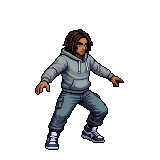
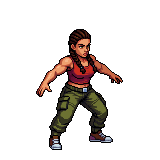


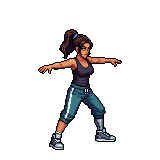
Every deck is an original motif. The board is a separate sprite from the skater, so a kickflip shows you the face of whatever you are riding.
Read straight from the table the engine resolves against, so it cannot fall out of date.
The simulation is a fixed timestep with no randomness, so a recording of your inputs reproduces the run frame for frame.
A run is stored as a few hundred input edges, not a video. Watch it back, then record the replay — so the clip is the run without your fumbling on the way to it.
Press R to record the canvas with the game’s own audio. MP4 where the browser supports it, which is what social platforms actually accept.
Submitted runs are replayed server-side through the same engine and only count if they reproduce the score. A forged number has no log that produces it.
Top speed tops out at 420px/s — except on Mega, which is a hill first and has its own ceiling.